There’s something oddly reassuring about watching water drip slowly into a clean glass. Clear. Quiet. Uncomplicated. We rarely stop to think about what had to happen before that water reached the tap — or what might still be in it when it does.
For many homeowners, the curiosity begins with a simple question: “Is my water as clean as it could be?” That question often leads to reverse osmosis systems. And somewhere between the product descriptions and the technical diagrams, things start sounding… complicated.
Membranes. Stages. Rejection rates. Pressure tanks.
But strip away the jargon, and the concept is surprisingly elegant.
The Basic Idea Behind Reverse Osmosis
At its core, reverse osmosis (RO) is about separation. It uses pressure to push water through a barrier that blocks unwanted particles while allowing clean water molecules to pass.
That barrier is known as a semi-permeable membrane, and it’s the heart of the system. Think of it as an extremely fine filter — far finer than anything you’d find in a typical pitcher filter. It’s designed to catch dissolved solids, heavy metals, and other microscopic contaminants that standard filtration might miss.
It’s not flashy technology. In fact, the principle has been around for decades. But it’s remarkably effective when applied correctly.
Why Stages Matter
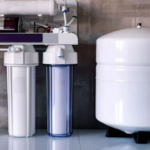
If you’ve ever looked at a reverse osmosis system, you probably noticed it doesn’t rely on a single filter. There are multiple stages, each handling a different task.
Before water even reaches the membrane, it typically passes through sediment pre and post filters. These filters remove larger particles like dirt, rust, and sand. Their job is to protect the membrane from clogging and extend its lifespan.
After the membrane does its work, post-filters polish the water — often using activated carbon to refine taste and remove any residual odors.
It’s a layered process. Each stage supports the next. And when all stages are maintained properly, the result feels seamless.
What “Rejection” Actually Means
You’ll often hear the phrase contaminant rejection when reading about RO systems. It sounds technical, maybe even intimidating. But it simply refers to the system’s ability to block unwanted substances.
Rejection rates are typically expressed as percentages. A high rejection rate means the membrane effectively prevents dissolved solids, heavy metals, and certain chemicals from passing through.
Of course, no system is perfect. Different membranes target different contaminants. That’s why water testing matters before choosing a system.
Understanding your water’s specific composition helps determine what needs to be removed — and what doesn’t.
Taste Is Often the First Noticeable Change
Most homeowners don’t install reverse osmosis systems because they enjoy technical specifications. They install them because of taste.
Chlorine, dissolved minerals, and other compounds can subtly affect flavor. After installing an RO system, many people notice their drinking water tastes cleaner. More neutral.
Coffee and tea often improve. Ice cubes look clearer. Even pasta cooked in filtered water may taste slightly different.
These aren’t dramatic transformations. But they’re consistent.
The Maintenance Reality
One common misconception is that reverse osmosis systems are maintenance-free. They’re not.
Filters need replacing. Membranes eventually wear out. Storage tanks require occasional sanitizing.
But the maintenance isn’t excessive, either. Most sediment and carbon filters are replaced every six to twelve months. Membranes often last two to three years, depending on usage and water quality.
It’s a manageable rhythm once you get used to it.
And ignoring maintenance is usually what leads to performance issues — not the technology itself.
Water Waste Concerns
Another topic that often comes up is wastewater. Reverse osmosis systems do produce some reject water as they flush away contaminants.
Modern systems are far more efficient than older models, but there’s still a tradeoff between purity and water usage.
For many homeowners, the improved water quality outweighs the additional water used. Still, it’s worth understanding the balance and choosing a system with reasonable efficiency ratings.
No solution is perfect. But informed decisions tend to feel better than blind ones.
Is Reverse Osmosis Right for Every Home?
Not necessarily.
If your municipal water is already low in dissolved solids and tastes fine, a simpler filtration system might be sufficient. If you rely on well water with high mineral content or specific contaminants, reverse osmosis may make more sense.
The key is customization.
Water quality varies widely by region. What works beautifully in one home might be unnecessary in another.
Testing your water before installing any system is always a smart first step.
The Quiet Confidence of Clean Water
What’s interesting about reverse osmosis systems is how invisible they are. Tucked under a sink, quietly working behind cabinet doors.
There’s no dramatic reveal. No aesthetic upgrade.
But there’s a subtle confidence in knowing your drinking water has passed through multiple stages of purification. That it’s been filtered at a molecular level.
That kind of peace of mind is hard to quantify — but easy to appreciate.
Final Thoughts
Reverse osmosis isn’t magic. It’s science applied thoughtfully.
A membrane that blocks what doesn’t belong. Supporting filters that protect and refine. A process designed to separate impurities from the water you rely on every day.
If you’re considering upgrading your home’s water system, take the time to understand how it works. Ask questions. Test your water. Choose a setup that fits your needs, not just the marketing.
Because in the end, clean water shouldn’t feel complicated.
It should feel simple, reliable — and quietly reassuring every time you turn on the tap.